

LATICRETE Europe expands its EPD journey with HYDRO BAN® – ACQUASHIELD READY
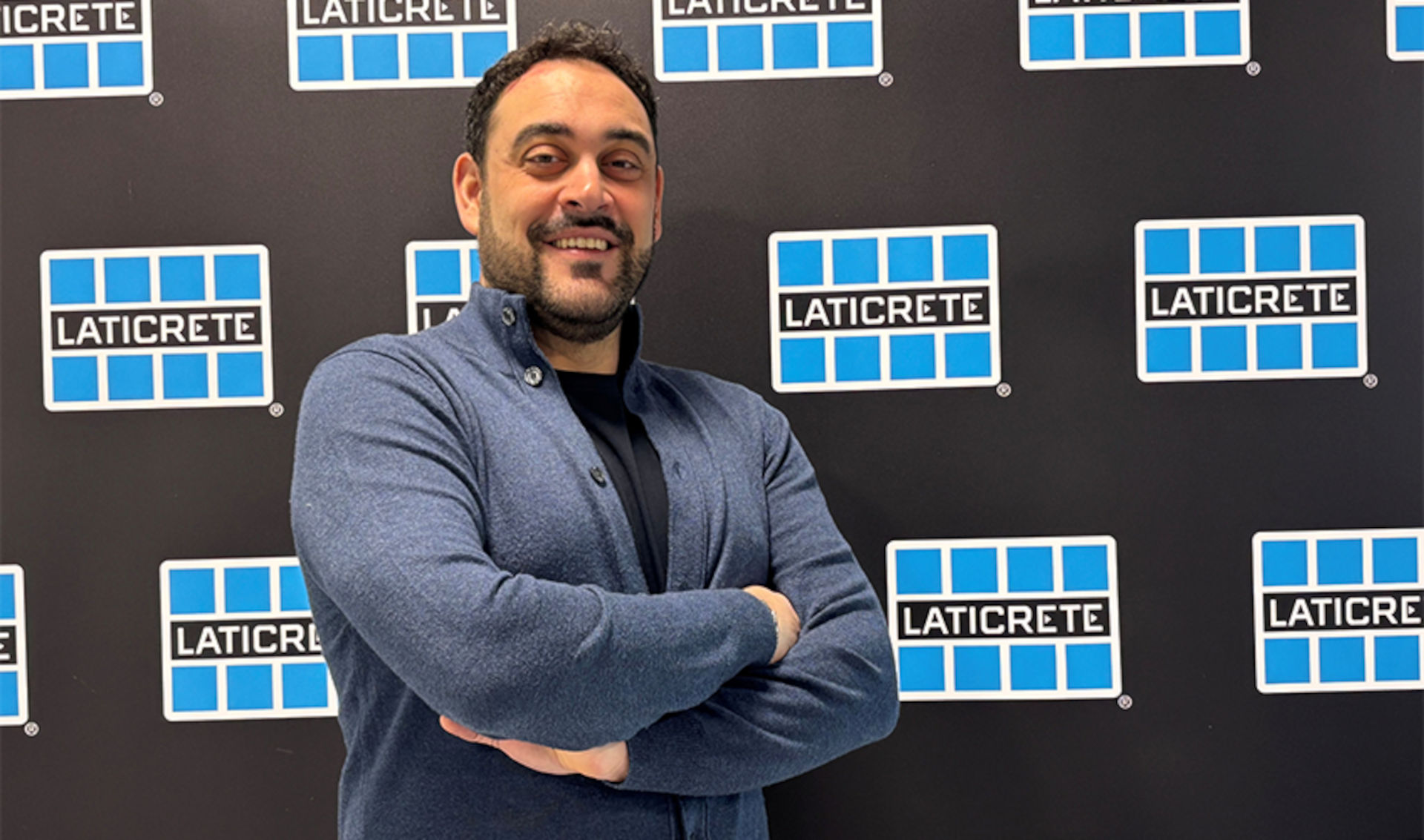
Matteo De Somma, Technical Director of LATICRETE Europe
After publishing EPDs for several product families, LATICRETE Europe, the European subsidiary of LATICRETE International, a global group active in tile installation systems and construction chemicals, continues its journey with EPDItaly with a new Environmental Product Declaration for HYDRO BAN® – ACQUASHIELD READY, one of the company’s main waterproofing solutions. Established in 2016, LATICRETE Europe has developed a model based on local production, technological innovation and a direct presence in key European markets.
This new publication is also the company’s first EPD for an individual product and provides an opportunity to explore the role of LCA in assessing environmental impacts, the evolving market demand for environmental information and the future outlook for EPDs.
We spoke with Matteo De Somma, Technical Director of LATICRETE Europe.
After the first EPDs published with EPDItaly, you chose to continue this journey with HYDRO BAN® – ACQUASHIELD READY. What led you to extend the Environmental Product Declaration to this solution as well?
After publishing our first EPDs, we wanted to continue along this path of environmental transparency by extending the assessment to HYDRO BAN® and ACQUASHIELD READY as well. They are essentially the same product, included in two different product ranges within our company, and represent one of our main waterproofing solutions, if not our flagship product overall. For this reason, it was important for us to develop an EPD for it as well.
In addition, designers and clients are increasingly asking for EPD documentation for this type of product. For adhesives and sealants, which we addressed previously, this need is even more evident, also in relation to the Italian Minimum Environmental Criteria (CAM). Waterproofing products, by contrast, do not fall within the scope of CAM: this is one of the reasons why this EPD came at a later stage.
Which aspects of the product emerged most clearly from the LCA carried out for this EPD?
The life cycle assessment helped us quantify and gain a deeper and more accurate understanding of the environmental contributions associated with the product, providing us with a clear picture of its impact across the different stages of its life cycle.
The value of this document lies not only in the figures obtained, but also in the fact that it makes what we do in terms of sustainability measurable. LCA is therefore not only a tool for environmental communication, but also a means of helping us better understand our processes and, where necessary, develop and improve them.
How can the results of an LCA guide the development or improvement of LATICRETE products?
LCA is an essential tool for improving the environmental performance of our production processes and products. It can help us better understand where to take action and which environmental or logistical considerations need to be taken into account in order to optimise certain processes. From this perspective, it also supports innovation and the optimisation of existing products, as well as the development of new ones.
Compared with your first experience with EPDs, has the way customers, designers and other industry professionals use or request environmental product information changed?
Less than a year has passed since our first EPDs, but we have certainly noticed growing interest. Environmental sustainability is becoming increasingly important, and I believe it will be one of the key issues in the years ahead.
At present, many EPDs are requested in connection with CAM requirements, particularly in Italy. There is also a certain degree of awareness of the issue across the rest of Europe, although this attention is still mainly focused on public-sector projects. In private-sector projects, where there is no specific regulatory requirement, this type of documentation is still often not considered necessary.
However, I believe that EPDs will become increasingly common in the private sector over the next few years, because meeting environmental requirements can add value to both buildings and design projects. Investors, particularly major investors, will pay growing attention to this type of certification: they will no longer be satisfied with a product that simply performs well, but will also expect it to be environmentally sustainable.
This new publication marks another step along the path you have undertaken. Do you plan to progressively extend EPDs to other solutions in the LATICRETE Europe range?
At present, we already have fairly broad coverage: the EPDs published so far cover several product ranges, from adhesives and sealants to underlayments. This, however, is the first EPD we have developed for an individual product.
We cannot rule out the possibility that EPDs for individual products, rather than entire product ranges, will be increasingly requested in the future, and we therefore expect to develop more of them. This will also depend on market demand. At the same time, we are currently focusing part of our attention on another type of environmental declaration, the FDES, which is specific to the French market.