

Those who chose EPDItaly tell their story: PM Serramenti
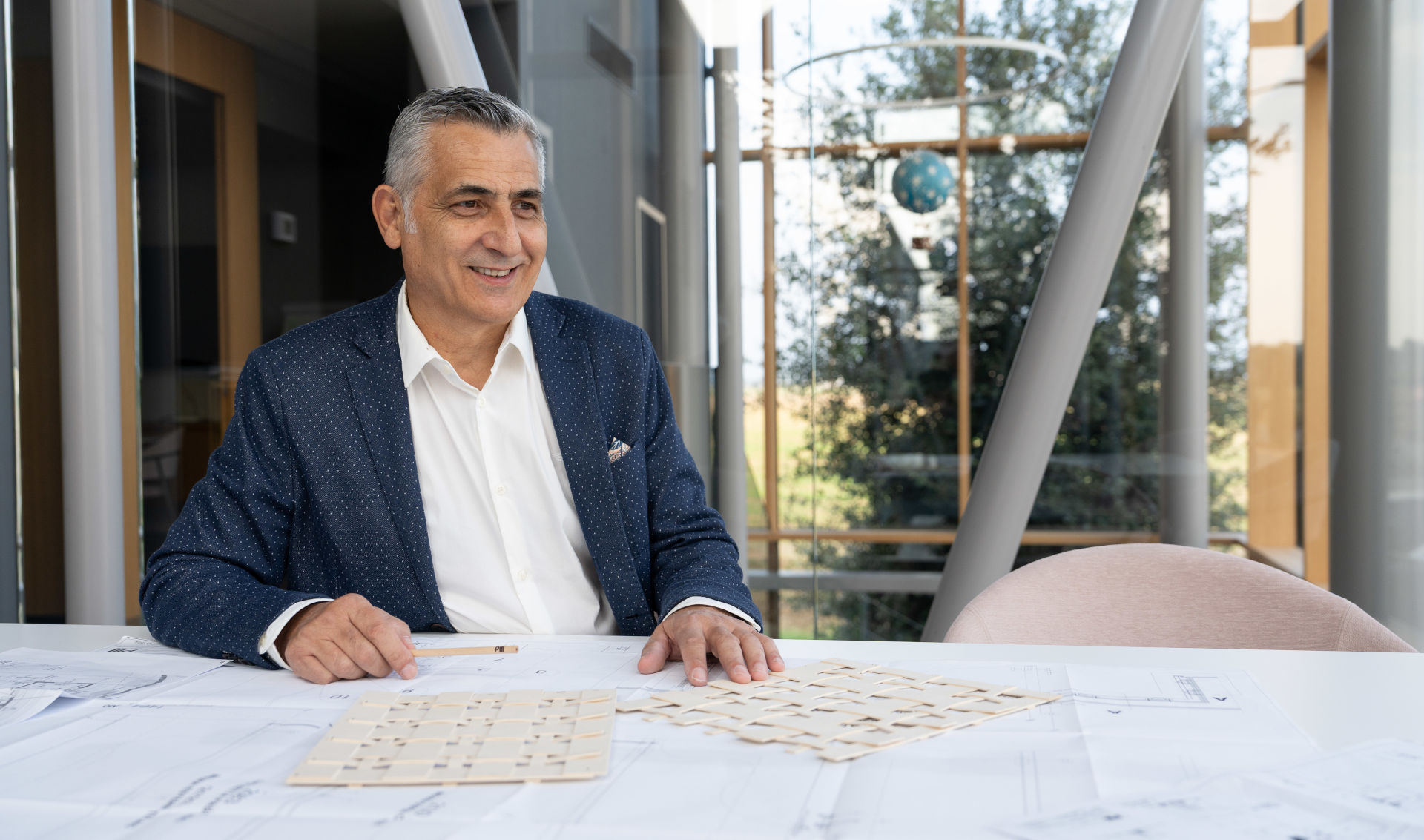
Patrizio Pesenti, founder and owner of PM Serramenti
PM Serramenti has been designing, manufacturing and installing timber and timber-aluminium windows since 1984, combining skilled woodworking craftsmanship with manufacturing technologies focused on product quality and performance.
Based in Mornico al Serio, in the province of Bergamo, the company manages the main stages of production in-house, from timber processing and finishing to the assembly of glazing and window hardware. This approach is complemented by a commitment to responsible raw material sourcing, reflected in the adoption of FSC and PEFC certification standards.
The Lombardy-based company chose EPDItaly to publish an Environmental Product Declaration (EPD) for the PM Tempo XV 80.73, an 80 mm timber window with two sashes.
We spoke with Patrizio Pesenti, founder and owner of PM Serramenti, about the reasons behind this decision, the benefits of publishing verified environmental data, and the role of EPDItaly in a market increasingly focused on transparency and sustainability.
What were the main reasons behind your decision to pursue a voluntary Environmental Product Declaration (EPD)?
The EPD builds on a journey we began many years ago, giving us concrete data to work with. We have been designing and manufacturing timber windows for over 40 years, and we strongly believe in the qualities of wood. However, we also wanted to be able to demonstrate the environmental impact of one of our products, supported by measurable data.
As with the certification processes we had already undertaken for FSC, PEFC, VOC and ISO 9001, this was a voluntary commitment that required considerable effort, and that is precisely why I consider it important. I believe companies today need the courage to measure their own performance and be transparent about their processes. The EPD has given us the opportunity to do just that.
Which of your products has obtained an EPD? What are its main features?
We obtained an EPD for the PM Tempo XV 80.73, an 80 mm timber window with two sashes. We designed it to combine performance, build quality and durability. It features low-emissivity double glazing, multiple weather seals, certified hardware and an innovative assembly system. Another distinctive feature is the finishing process: we use water-based coating systems applied through an automated production line. The insulating glass units are also assembled in-house.
Beyond the individual technical specifications, what matters most to us about this product, as with all our products, is how it is manufactured. By maintaining direct control over every stage of production, we can ensure greater consistency in quality and performance.
What have been the main benefits of publishing an Environmental Product Declaration? How does it benefit the end customer?
The first benefit was for us as a company: the EPD made us look at our product from a different perspective. When you measure the environmental impact of a window throughout its life cycle, you start asking very practical questions: What materials do we use? How are they produced? How much energy do we consume? What can we improve? This process builds awareness throughout the company.
For customers, the main benefit is transparency. There is a lot of talk about “green” or sustainable products today, but consumers often find it difficult to understand what actually lies behind those claims. An EPD provides verified information and enables people to make assessments based on data. I believe this is the most valuable thing we can offer our customers: rather than simply asking them to trust us, we give them objective information on which to base their decisions.
Do you believe EPDItaly can help promote a stronger culture of product sustainability?
Yes, certainly, especially because I believe sustainability requires a methodical approach. Everyone talks about sustainability these days, but there is a risk that the term becomes overused. For me, sustainability means measuring, verifying and, above all, continuously looking for ways to improve.
An organisation such as EPDItaly can help companies take these steps and contribute to establishing a common language among manufacturers, designers and the wider market. As a business owner, I also believe that a change in mindset is important: sustainability should not be seen simply as an obligation or an expense, but as an ongoing process of business improvement.
How important do you think it is for sustainable products made in Italy to be represented by a Program Operator with a strong international network?
It is extremely important because it helps showcase the strengths of Italian manufacturing internationally. Italy has a long-standing tradition in woodworking and window manufacturing, and many companies have invested in technology, quality and innovation over the years. I believe it is important for these businesses to be able to demonstrate their commitment through internationally recognised tools.
For PM Serramenti, obtaining an EPD is also about being willing to measure ourselves against objective, shared criteria, rather than simply claiming that we make high-quality products with due regard for the environment. I believe this is the right way forward: building on what we do well in Italy while remaining open to comparing our performance with that of companies around the world.